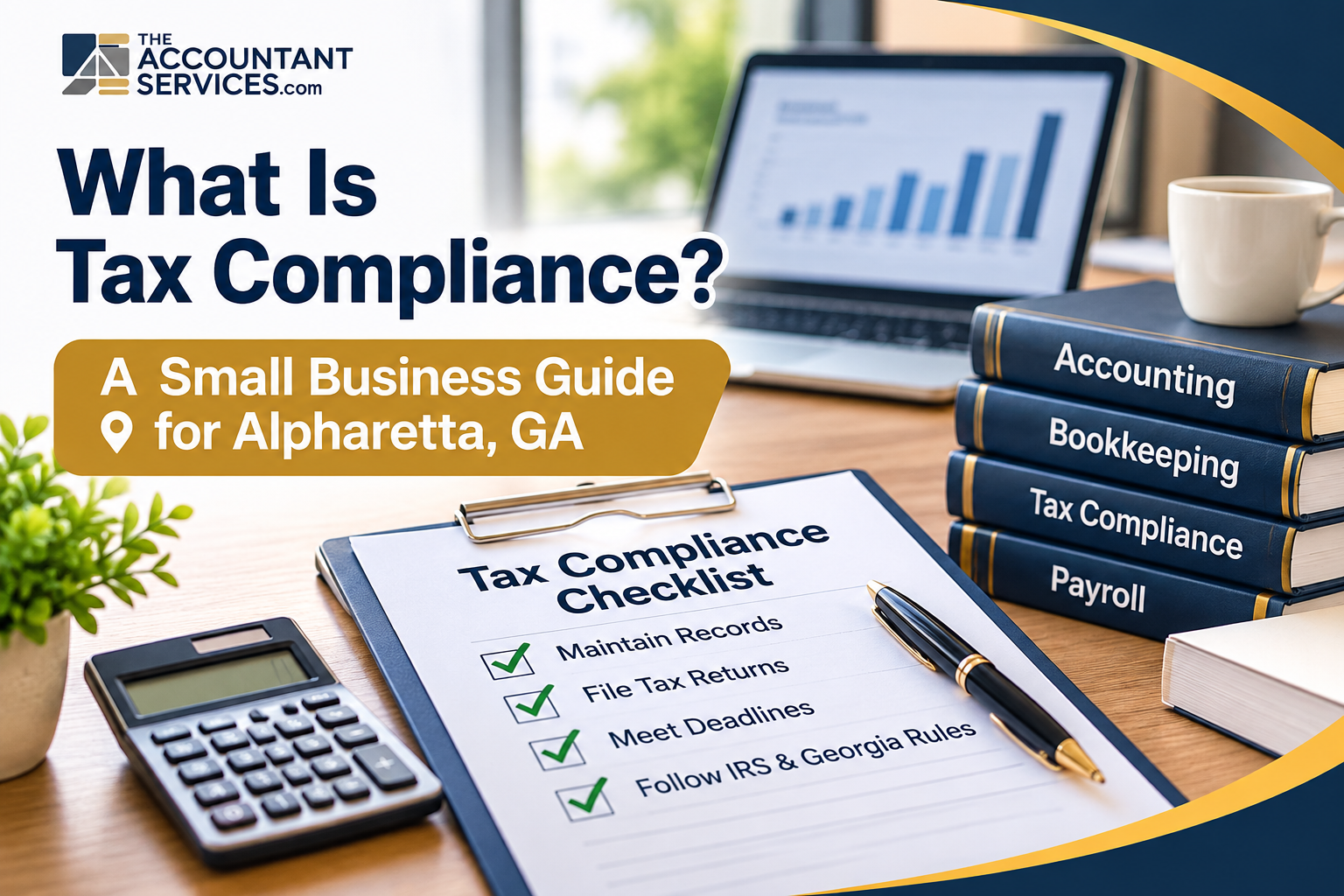
What Is Tax Compliance?
Tax compliance refers to following applicable tax laws, reporting requirements and filing obligations. For businesses, this generally involves maintaining accurate financial information, reporting income correctly, preparing required tax returns and meeting applicable payment deadlines. Business tax compliance may involve federal, state and local requirements depending on the business structure, activities and location. For example, a business operating in Georgia may need to consider federal income tax obligations alongside applicable Georgia tax requirements. Tax compliance requirements vary between sole proprietorships, partnerships, LLCs and corporations. Business owners should understand which requirements apply to their specific business structure.Why Is Tax Compliance Important for Small Businesses?
Maintaining a proper tax compliance process helps business owners stay informed about their financial responsibilities. Here are several reasons why tax compliance matters.1. Helps Maintain Accurate Financial Records
Organised financial records make it easier to understand business income, expenses and financial transactions. The IRS explains that business records can help owners prepare financial statements, identify income sources, track expenses and support information reported on tax returns. Keeping records updated throughout the year can make tax preparation more manageable.2. Helps Businesses Prepare for Filing Deadlines
Businesses may have different filing and payment deadlines depending on their structure, income, employees and tax obligations. Keeping a calendar of applicable deadlines can help business owners plan ahead and avoid last-minute paperwork. Rather than waiting until tax season, businesses should review their financial records regularly and identify upcoming reporting requirements.3. Supports Better Financial Planning
Tax compliance and financial planning are closely connected. When business owners maintain accurate records, they can better understand their income, expenses and potential financial obligations. This information can support budgeting, cash flow planning and business decisions.4. Helps Respond to Tax Information Requests
Businesses may need to provide supporting financial documents when responding to questions from tax authorities. Maintaining organised invoices, receipts, bank statements and accounting records can make it easier to locate relevant information when needed.Common Business Tax Compliance Requirements
Tax requirements depend on the business structure and activities. However, many businesses need to manage several important areas.Federal Tax Requirements
Federal tax responsibilities may include reporting business income, maintaining supporting records and filing applicable federal tax returns. The requirements differ depending on whether a business operates as a sole proprietorship, partnership, corporation or another legal structure. Business owners should understand which federal tax forms and reporting obligations apply to their operations.Georgia State Tax Requirements
Businesses operating in Georgia may have state tax responsibilities depending on their activities and business structure. These may include applicable income tax, sales and use tax, withholding tax or other business-related requirements. The Georgia Department of Revenue provides information about business tax audits and related recordkeeping requirements. Business owners should review the requirements applicable to their business rather than assuming every business has the same tax obligations.Employment and Payroll Tax Responsibilities
Businesses with employees may have additional responsibilities involving payroll records, employment taxes, withholding and related reporting. Maintaining accurate payroll information and supporting documentation is an important part of managing these obligations. Businesses should also understand whether they have separate requirements for employees and independent contractors.7 Practical Tax Compliance Tips for Small Business Owners
A consistent tax compliance process can help business owners stay organised throughout the year.1. Keep Business and Personal Finances Separate
Using separate business and personal accounts can make it easier to identify business transactions. It also helps simplify financial recordkeeping and expense reviews.2. Record Income and Expenses Regularly
Avoid leaving financial transactions unrecorded for long periods. Record business income and expenses consistently so that financial information remains current.3. Organise Receipts and Invoices
Keep supporting documents such as:- Customer invoices
- Supplier bills
- Business expense receipts
- Bank statements
- Payroll records
- Relevant tax documents
4. Reconcile Business Bank Accounts
Regular bank reconciliation helps compare accounting records with bank statements. This process can identify missing transactions, duplicate entries and recording differences. Keeping reconciliations current can help improve the reliability of financial records.5. Review Financial Records Before Tax Season
Review income, expenses and supporting documentation periodically. Identify missing information early and resolve discrepancies before preparing tax returns.6. Maintain a Tax Deadline Calendar
Create a calendar for applicable filing and payment deadlines. The schedule should reflect your business structure, tax obligations and reporting requirements. Avoid relying on a single deadline for every business tax responsibility.7. Work With Qualified Tax Professionals When Needed
Tax rules can become complicated as businesses grow. Professional support may help business owners understand applicable requirements, organise financial information and prepare for tax-related responsibilities. The right level of support depends on the business’s structure, activities and financial needs.What Happens If a Business Does Not Meet Tax Requirements?
Failing to meet applicable tax obligations can create financial and administrative problems. Depending on the circumstances, businesses may face penalties, interest, additional reporting requirements or further communication with tax authorities. The consequences depend on the specific obligation, circumstances and applicable rules. If a business identifies a missed filing or payment, it should review the situation promptly and seek qualified guidance about the appropriate next steps. Maintaining accurate records and monitoring deadlines can help businesses manage their tax responsibilities more effectively.Tax Compliance vs. Tax Preparation: What’s the Difference?
Tax compliance and tax preparation are related, but they are not exactly the same. Tax compliance involves managing applicable tax responsibilities, maintaining records and meeting relevant reporting and payment obligations. Tax preparation focuses on organising financial information and preparing tax returns for filing. Tax preparation may be one part of a broader tax compliance process. Businesses should confirm which services are included when working with an accounting or tax professional.Tax Compliance Services in Alpharetta, GA
Small business owners often need support managing financial records, understanding tax-related responsibilities and preparing for important deadlines. The Accountant Services offers accounting and tax-related support for businesses and individuals. If you are looking for Tax Compliance Services in Alpharetta, reviewing your business’s financial records and current tax requirements can be a useful starting point. Our team can discuss your business needs and help you understand the services that may be relevant to your situation. Visit our Tax Compliance Services to learn more about our services and request a consultation.Need Help Managing Your Business Books?
Keep your financial records organised and get support tailored to your business needs. Contact The Accountant Services to discuss your bookkeeping requirements.
Discuss Your Bookkeeping Needs →Frequently Asked Questions
Tax compliance means following applicable tax laws and requirements. It may involve maintaining financial records, reporting business income, filing required tax returns and meeting payment deadlines.
Some businesses choose professional support to help manage their tax-related responsibilities. Whether a business needs these services depends on its structure, activities, financial complexity and internal resources.
Businesses may need to maintain income records, expense receipts, invoices, bank statements, payroll documents and other supporting financial information. The exact records depend on the business and applicable tax requirements.
Businesses should update financial records regularly and review them throughout the year. Monthly reviews can help identify missing information and prepare for upcoming deadlines.
Yes. Accurate bookkeeping can help organise financial transactions and supporting records used during tax preparation and other tax-related activities. However, bookkeeping alone does not automatically ensure that every tax obligation has been met.
Tax compliance focuses on meeting applicable tax requirements. Tax planning involves evaluating financial circumstances and considering lawful strategies related to future tax obligations. Both may be relevant to business financial management.